

Product details
ISBN
9781786393777
Published
2020-05-05
Edition
2. edition
Publisher
CABI Publishing
Weight
1379 gr
Height
244 mm
Width
172 mm
Thickness
29 mm
Age
G, 01
Language
Product language
Engelsk
Format
Product format
Innbundet
Number of pages
512
Contributions by
Biographical note
Ep Heuvelink is an associate professor with ius promovendi in the Horticulture and Product Physiology group at Wageningen University & Research (WUR), The Netherlands. He has more than 30 years of experience in scientific research and education in greenhouse crops. His expertise lies in greenhouse crop physiology and crop modelling. Core concepts in both his research and education are photosynthesis, dry matter partitioning, crop growth and development (especially flowering and fruit set). Crop simulation models are central in his analytical, quantitative thinking about crop growth, and a powerful tool to integrate and extrapolate knowledge. He has supervised over 120 MSc thesis students and is co-promotor of 40 PhD students. Ep is frequently invited as a keynote speaker at international symposia and teaches advanced intensive courses on greenhouse production, crop physiology and crop modelling around the world. He is also a teacher in the Wageningen Summer school on Greenhouse Horticulture and has (co-)authored more than 150 papers in refereed scientific journals, 200 papers in professional journals and has authored three books and edited another three. Ep is listed in the Stanford/Elsevier world's top 2% scientists list and ranked 32 in list of best Wageningen scientists in the field of agriculture and plant sciences. Haim obtained his academic education in plant physiology and genetics at the Hebrew University of Jerusalem. He worked as a Postdoctoral Scientist at The John Innes Institute (Norwich England) and at the Wageningen Agricultural University (Holland) before recruited as a staff member at the Hebrew University of Jerusalem. He spent three sabbaticals at Duke University Medical Centre, Department of Biochemistry. In addition to research, teaching, and supervision, Haim served as elected Head of the Department of Field and Vegetable Crops, elected Head of Faculty Research Committee, elected Faculty Dean and elected University Rector. His research interests include physiology of vegetable crops with special emphasis on flowering, setting and seed production; Physiology and potato breeding. Haim shared the idea and actual introduction of genes for long keeping in tomatoes, the development and introduction of cherry tomatoes as a standard commodity, and later that of cluster tomatoes. He headed a leading ream of plant breeders and released more than a hundred salad and cherry tomato hybrids, as well as short-day onion hybrids, short day seed propagated shallot hybrids, and currently he jointly leads a large-scale garlic breeding program aiming at seed propagated hybrid garlic. He supervised about 80 graduate students, published about 150 scientific papers, chapters in books and edited books on alliums.
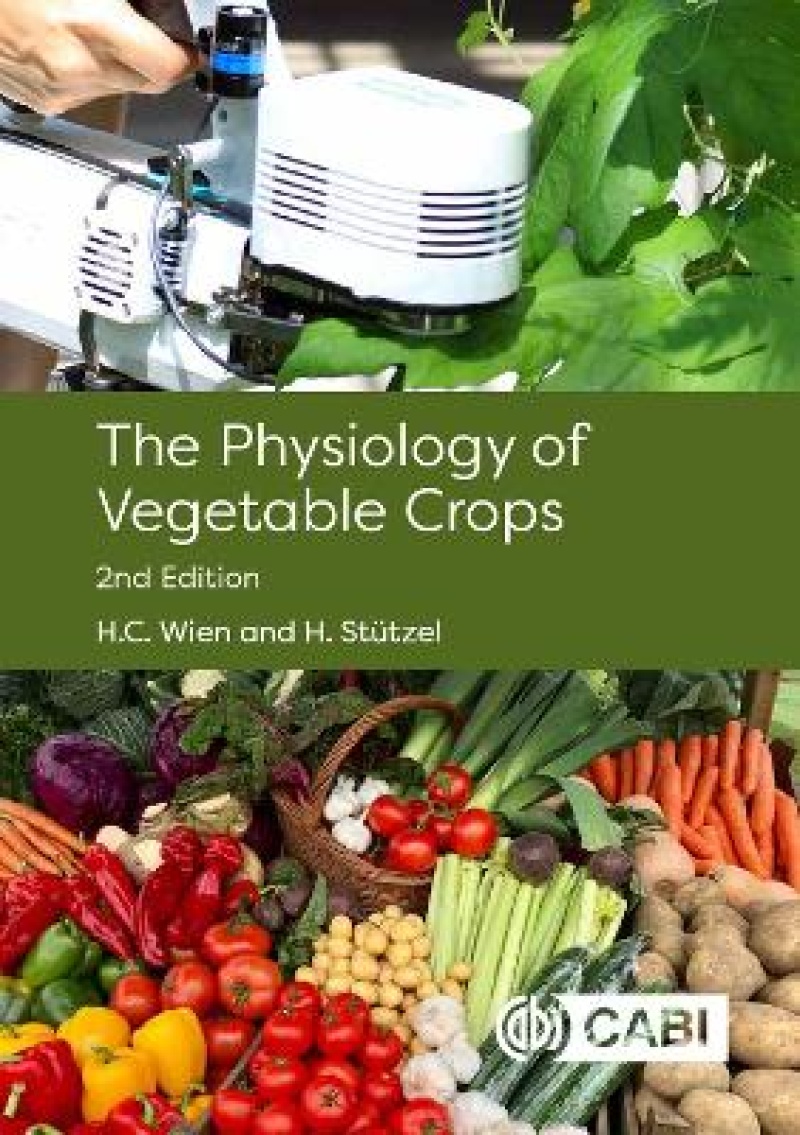
Completely updated and revised, this bestselling book continues to explain the growth and developmental processes involved in the formation of vegetables. Since the publication of the successful first edition significant discoveries, particularly in the area of molecular biology, have deepened and broadened our knowledge and understanding of these processes. This new edition brings the topic up-to-date and is presented over two sections: the first provides general knowledge on germination, transplanting, flowering, the effects of stress and modelling, whilst the second section details the physiology of specific crops or crop groups. The second edition of The Physiology of Vegetable Crops: · contains two new chapters looking at stress effects on vegetable crops with a particular emphasis on climate change and models of vegetable growth and development · is fully updated to reflect recent discoveries and the advent of new production techniques such as growing in artificial environments · provides enhanced understanding of the growth and function of 18 different vegetable crops · is heavily illustrated and published in full colour throughout With contributions from renowned international experts, this is an essential resource for horticultural researchers and extension educators and consultants, as well as a reference for students and researchers in vegetable production, plant breeding, entomology and plant pathology.
Read more
This is a new edition of a popular title, providing enhanced understanding of the growth and function of 18 different vegetable crops. It is fully revised with new chapters on models and the effects of climate change; now presented in full colour throughout.
Read more
1: Seed Storage, Germination, Quality and Enhancements 2: Transplanting 3: Regulation of flowering in crop plants 4: Abiotic stress effects on vegetable crops 5: Models of vegetable growth and development 6: Correlative growth in vegetable plants 7: Tomato 8: Peppers 9: Potato 10: The Cucurbits 11: Phaseolus Beans 12: Peas 13: Sweet Corn 14: Lettuce 15A: Cauliflower, Broccoli, Cabbage and Brussels Sprouts 15B: Glucosinolates in Brassica 16: The Root Vegetables: Beet, Carrot, Parsnip and Turnip 17: Allium Crops 18: Asparagus
Read more
Since the publication of the first edition of this book, significant discoveries have deepened and broadened our knowledge and understanding of the growth and developmental processes involved in the formation of vegetables, particularly in the area of molecular biology. This new edition brings the topic up-to-date and is presented over two sections: the first provides general knowledge on germination, transplanting, flowering, the effects of stress and modelling, whilst the second section details the physiology of specific crops or crop groups. The second edition of The Physiology of Vegetable Crops: · contains two new chapters looking at stress effects on vegetable crops with a particular emphasis on climate change and models of vegetable growth and development · reflects recent discoveries and the advent of new production techniques such as growing in artificial environments · provides enhanced understanding of the growth and function of 18 different vegetable crops With contributions from renowned international experts, this is an essential resource for horticultural researchers and extension educators and consultants, as well as a reference for students and researchers in vegetable production, plant breeding, entomology and plant pathology.
Read more
Horticultural researchers, extension educators, consultants
Product details
ISBN
9781786393777
Published
2020-05-05
Edition
2. edition
Publisher
CABI Publishing
Weight
1379 gr
Height
244 mm
Width
172 mm
Thickness
29 mm
Age
G, 01
Language
Product language
Engelsk
Format
Product format
Innbundet
Number of pages
512
Contributions by