

Produktdetaljer
ISBN
9780195357448
Publisert
2020
Utgiver
Oxford University Press Academic US
Språk
Product language
Engelsk
Format
Product format
Digital bok
Forfatter
Digital bok /
2020
/ Engelsk
79,-
Laveste pris siste 30 dager: 79,-
Dette er en digital bok som er bundet til bokleseren Bookshelf. Du vil få en aktiveringslenke på e-post når du har fullført kjøpet.
Klikk her for mer info.

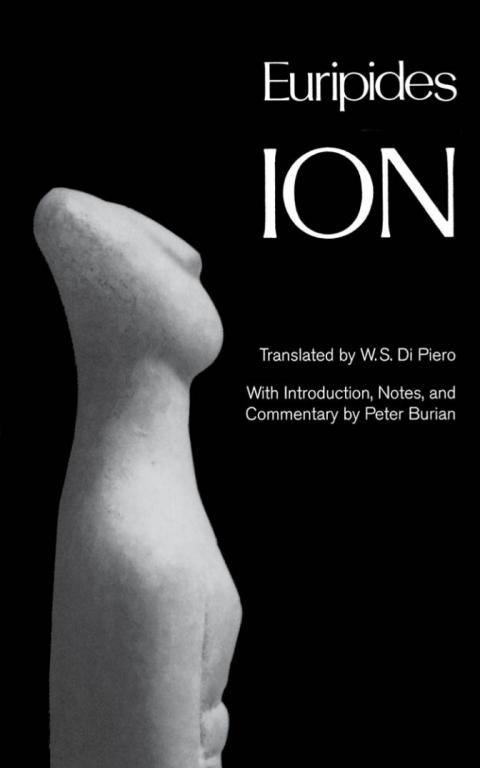
Series Copy Based on the conviction that only translators who write
poetry themselves can properly recreate the celebrated and timeless
tragedies of Aeschylus, Sophocles, and Euripides, The Greek Tragedies
in New Translations series offers new translations that go beyond the
literal meaning of the Greek in order to evoke the poetry of the
originals. Under the editorship of Herbert Golder and the late William
Arrowsmith, each volume includes a critical introduction, commentary
on the text, full stage directions, and a glossary of the mythical and
geographical references in the plays. One of Euripides' late plays,
Ion is a complex enactment of the changing relations between the human
and divine orders and the way in which our understanding of the gods
is mediated and re-visioned by myths. The story begins years before
the play begins, with the rape of the mortal Kreousa, queen of Athens,
by Apollo. Kreousa bears Apollos' child in secret then abandons it.
Unbeknownst to her, Apollo has the child brought to his temple at
Delphi to be reared by the priestess as ward of the shrine. Many years
later, Kreousa, now married to the foreigner Xouthos but childless,
comes to Delphi seeking prophecy about children. Apollo, however,
speaking through the oracle, bestows the temple ward, Ion, on Xouthos
as his child. Enraged, Kreousa conspires to kill as an interloper the
very son she has despaired of finding. After mother and son both try
to kill each other, the priestess reveals the birth tokens that permit
Kreousa to recognize and embrace the child she thought was dead. Ion
discovers the truth of his parentage and departs for Athens, as a
mixed blood of humanity and divinity, to participate in the life of
the polis. In Ion, disturbing riptides of thought and feeling run just
below the often shimmering surfaces of Euripidean melodrama. Although
the play contains some of Euripides' most beautiful lyrical writing,
it quivers throughout with near disasters, poorly informed actions and
misdirected intentions that almost result in catastrophe. Kreousa says
at one point that good and evil do not mix, but Euripides' argument,
and what the youthful Ion strives to understand, is that human beings
are not only compounded of good and evil, but that the two are often
the same thing differently experienced, differently understood, just
as beauty and violence are mixed both in the gods and in the mortal
world.
Les mer
Series Copy Based on the conviction that only translators who write
poetry themselves can properly recreate the celebrated and timeless
tragedies of Aeschylus, Sophocles, and Euripides, The Greek Tragedies
in New Translations series offers new translations that go beyond the
literal meaning of the Greek in order to evoke the poetry of the
originals. Under the editorship of Herbert Golder and the late William
Arrowsmith, each volume includes a critical introduction, commentary
on the text, full stage directions, and a glossary of the mythical and
geographical references in the plays. One of Euripides' late plays,
Ion is a complex enactment of the changing relations between the human
and divine orders and the way in which our understanding of the gods
is mediated and re-visioned by myths. The story begins years before
the play begins, with the rape of the mortal Kreousa, queen of Athens,
by Apollo. Kreousa bears Apollos' child in secret then abandons it.
Unbeknownst to her, Apollo has the child brought to his temple at
Delphi to be reared by the priestess as ward of the shrine. Many years
later, Kreousa, now married to the foreigner Xouthos but childless,
comes to Delphi seeking prophecy about children. Apollo, however,
speaking through the oracle, bestows the temple ward, Ion, on Xouthos
as his child. Enraged, Kreousa conspires to kill as an interloper the
very son she has despaired of finding. After mother and son both try
to kill each other, the priestess reveals the birth tokens that permit
Kreousa to recognize and embrace the child she thought was dead. Ion
discovers the truth of his parentage and departs for Athens, as a
mixed blood of humanity and divinity, to participate in the life of
the polis. In Ion, disturbing riptides of thought and feeling run just
below the often shimmering surfaces of Euripidean melodrama. Although
the play contains some of Euripides' most beautiful lyrical writing,
it quivers throughout with near disasters, poorly informed actions and
misdirected intentions that almost result in catastrophe. Kreousa says
at one point that good and evil do not mix, but Euripides' argument,
and what the youthful Ion strives to understand, is that human beings
are not only compounded of good and evil, but that the two are often
the same thing differently experienced, differently understood, just
as beauty and violence are mixed both in the gods and in the mortal
world.
Les mer
Produktdetaljer
ISBN
9780195357448
Publisert
2020
Utgiver
Oxford University Press Academic US
Språk
Product language
Engelsk
Format
Product format
Digital bok
Forfatter