

Produktdetaljer
ISBN
9781472852410
Publisert
2022
Utgave
1. utgave
Utgiver
Bloomsbury UK
Språk
Product language
Engelsk
Format
Product format
Digital bok
Forfatter
Digital bok /
2022
/ Engelsk
103,-
Laveste pris siste 30 dager: 103,-
Dette er en digital bok som er bundet til bokleseren Bookshelf. Du vil få en aktiveringslenke på e-post når du har fullført kjøpet.
Klikk her for mer info.


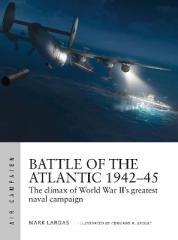


A NEW HISTORY OF THE MOST CRUCIAL FEW MONTHS OF THE ARCTIC CONVOYS,
WHEN GERMANY'S AIR POWER FORCED THE ALLIES TO RETREAT TO THE COVER OF
WINTER.
Between spring and autumn 1942, Germany was winning the battle of the
Arctic Convoys. Half of PQ-15 was sunk in May, PQ-17 was virtually
obliterated in July, and in September 30 percent of PQ-18 was sunk.
The Allies were forced to suspend the convoys until December, when the
long Arctic nights would shield them.
Mark Lardas argues that in 1942, it was Luftwaffe air power that made
the difference. With convoys sailing in endless daylight, German
strike aircraft now equipped and trained for torpedo attacks, and
bases in northern Norway available, the Luftwaffe could wreak havoc.
Three-quarters of the losses of PQ-18 were due to air attacks. But in
November, the Luftwaffe was redeployed south to challenge the Allied
landings in North Africa, and the advantage was lost. Despite that,
the Allies never again sailed an Arctic convoy in the summer months.
Fully illustrated with archive photos, striking new artwork, maps and
diagrams, this is the remarkable history of the Luftwaffe's last
strategic victory of World War II.
Les mer
The Luftwaffe cuts Russia's lifeline
A NEW HISTORY OF THE MOST CRUCIAL FEW MONTHS OF THE ARCTIC CONVOYS,
WHEN GERMANY'S AIR POWER FORCED THE ALLIES TO RETREAT TO THE COVER OF
WINTER.
Between spring and autumn 1942, Germany was winning the battle of the
Arctic Convoys. Half of PQ-15 was sunk in May, PQ-17 was virtually
obliterated in July, and in September 30 percent of PQ-18 was sunk.
The Allies were forced to suspend the convoys until December, when the
long Arctic nights would shield them.
Mark Lardas argues that in 1942, it was Luftwaffe air power that made
the difference. With convoys sailing in endless daylight, German
strike aircraft now equipped and trained for torpedo attacks, and
bases in northern Norway available, the Luftwaffe could wreak havoc.
Three-quarters of the losses of PQ-18 were due to air attacks. But in
November, the Luftwaffe was redeployed south to challenge the Allied
landings in North Africa, and the advantage was lost. Despite that,
the Allies never again sailed an Arctic convoy in the summer months.
Fully illustrated with archive photos, striking new artwork, maps and
diagrams, this is the remarkable history of the Luftwaffe's last
strategic victory of World War II.
Les mer
The Luftwaffe cuts Russia's lifeline
Produktdetaljer
ISBN
9781472852410
Publisert
2022
Utgave
1. utgave
Utgiver
Bloomsbury UK
Språk
Product language
Engelsk
Format
Product format
Digital bok
Forfatter