

Produktdetaljer
ISBN
9780228025566
Publisert
2025
Utgiver
ACP - McGill Queen's University Press
Språk
Product language
Engelsk
Format
Product format
Digital bok
Forfatter
Digital bok /
2025
/ Engelsk
317,-
Laveste pris siste 30 dager: 316,-
Dette er en digital bok som er bundet til bokleseren Bookshelf. Du vil få en aktiveringslenke på e-post når du har fullført kjøpet.
Klikk her for mer info.
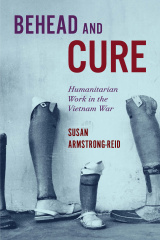

The war in Vietnam was an ethical minefield for the medical
humanitarians who volunteered to treat the injured and dying. The
United States government used humanitarian aid as a counterinsurgency
strategy and weapon of war. The Vietnamese people could not understand
why the Americans and their allies sought at once to attack them and
to save them by providing medical care. Civilian medical teams
increasingly questioned their complicity in the war and whether
neutrality was possible. Behead and Cure explores the ethics of
humanitarianism in Vietnam through the stories of seven medical teams
from the United States, Britain, Canada, and Australia. Non-combatant
women played key roles in all aspects of caring for civilians; this
book repositions them from the sidelines of the Vietnam War to the
centre. Drawing on interviews and first-hand accounts, Susan
Armstrong-Reid considers how personality, life experience, place, and
the culture of medical teams affected women’s professional and
personal lives in Vietnam and their lives afterwards. Confronted daily
with the horrors of war, they were expected to fulfill their gendered
roles as purveyors of Western medical care, humanitarian ambassadors,
and models of femininity. Some proved resilient and pursued a lifelong
commitment to peace movements and humanitarian causes. Others suffered
burnout and sought to expunge the memory of their years in Vietnam.
Behead and Cure provides a new perspective on the ethical dilemmas
facing humanitarian workers and the collateral human costs of war that
remain timely today. It reveals how the experience of Vietnam changed
humanitarians’ views of their profession, their own countries’
foreign policies, and the place of the United States in the world.
Les mer
Humanitarian Work in the Vietnam War
The war in Vietnam was an ethical minefield for the medical
humanitarians who volunteered to treat the injured and dying. The
United States government used humanitarian aid as a counterinsurgency
strategy and weapon of war. The Vietnamese people could not understand
why the Americans and their allies sought at once to attack them and
to save them by providing medical care. Civilian medical teams
increasingly questioned their complicity in the war and whether
neutrality was possible. Behead and Cure explores the ethics of
humanitarianism in Vietnam through the stories of seven medical teams
from the United States, Britain, Canada, and Australia. Non-combatant
women played key roles in all aspects of caring for civilians; this
book repositions them from the sidelines of the Vietnam War to the
centre. Drawing on interviews and first-hand accounts, Susan
Armstrong-Reid considers how personality, life experience, place, and
the culture of medical teams affected women’s professional and
personal lives in Vietnam and their lives afterwards. Confronted daily
with the horrors of war, they were expected to fulfill their gendered
roles as purveyors of Western medical care, humanitarian ambassadors,
and models of femininity. Some proved resilient and pursued a lifelong
commitment to peace movements and humanitarian causes. Others suffered
burnout and sought to expunge the memory of their years in Vietnam.
Behead and Cure provides a new perspective on the ethical dilemmas
facing humanitarian workers and the collateral human costs of war that
remain timely today. It reveals how the experience of Vietnam changed
humanitarians’ views of their profession, their own countries’
foreign policies, and the place of the United States in the world.
Les mer
Humanitarian Work in the Vietnam War
Produktdetaljer
ISBN
9780228025566
Publisert
2025
Utgiver
ACP - McGill Queen's University Press
Språk
Product language
Engelsk
Format
Product format
Digital bok
Forfatter