

Produktdetaljer
ISBN
9781000093551
Publisert
2020
Utgave
1. utgave
Utgiver
Taylor & Francis
Språk
Product language
Engelsk
Format
Product format
Digital bok
Forfatter
Digital bok /
2020
/ Engelsk
307,-
Laveste pris siste 30 dager: 307,-
Dette er en digital bok som er bundet til bokleseren Bookshelf. Du vil få en aktiveringslenke på e-post når du har fullført kjøpet.
Klikk her for mer info.

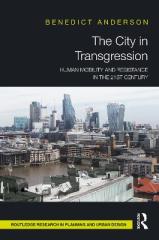

The City in Transgression explores the unacknowledged, neglected, and
ill-defined spaces of the built environment and their transition into
places of resistance and residence by refugees, asylum seekers,
migrants, the homeless, and the disadvantaged. The book draws on urban
and spatial theory, socio-economic factors, public space, and
architecture to offer an intimate look at how urban sites and
infrastructure are transformed into spaces for occupation. Anderson
proposes that the varied innovations and adaptations of urban spaces
enacted by such marginalized figures – for whom there are no other
options – herald a radical new spatial programming of cities. The
book explores cities and sites such as Mexico City and London, the
Mexican/US border, the Calais Jungle, and Palestinian camps in Beirut
and utilizes concepts associated with ‘mobility’ – such as
anarchy, vagrancy, and transgression – alongside photography, 3D
modelling, and 2D imagery. From this constellation of materials and
analysis, a radical spatial picture of the city in transgression
emerges. By focusing on the ‘underside of urbanism’, The City in
Transgression reveals the potential for new spatial networks that can
cultivate the potential for self-organization so as to counter the
existing dominant urban models of capital and property and to confront
some of the major issues facing cities amid an age of global human
mobility. This book is valuable reading for those interested in
architectural theory, modern history, human geography and mobility,
climate change, urban design, and transformation.
Les mer
Human Mobility and Resistance in the 21st Century
The City in Transgression explores the unacknowledged, neglected, and
ill-defined spaces of the built environment and their transition into
places of resistance and residence by refugees, asylum seekers,
migrants, the homeless, and the disadvantaged. The book draws on urban
and spatial theory, socio-economic factors, public space, and
architecture to offer an intimate look at how urban sites and
infrastructure are transformed into spaces for occupation. Anderson
proposes that the varied innovations and adaptations of urban spaces
enacted by such marginalized figures – for whom there are no other
options – herald a radical new spatial programming of cities. The
book explores cities and sites such as Mexico City and London, the
Mexican/US border, the Calais Jungle, and Palestinian camps in Beirut
and utilizes concepts associated with ‘mobility’ – such as
anarchy, vagrancy, and transgression – alongside photography, 3D
modelling, and 2D imagery. From this constellation of materials and
analysis, a radical spatial picture of the city in transgression
emerges. By focusing on the ‘underside of urbanism’, The City in
Transgression reveals the potential for new spatial networks that can
cultivate the potential for self-organization so as to counter the
existing dominant urban models of capital and property and to confront
some of the major issues facing cities amid an age of global human
mobility. This book is valuable reading for those interested in
architectural theory, modern history, human geography and mobility,
climate change, urban design, and transformation.
Les mer
Human Mobility and Resistance in the 21st Century
Produktdetaljer
ISBN
9781000093551
Publisert
2020
Utgave
1. utgave
Utgiver
Taylor & Francis
Språk
Product language
Engelsk
Format
Product format
Digital bok
Forfatter