

Produktdetaljer
Biografisk notat
Elizabeth Ward is a Lecturer in German Studies and specializes in German film. She is a lecturer at the Europa-Universität Viadrina and a Marie Skłodowska-Curie Actions research fellow at the Universität Leipzig. She has published on East German cinema, contemporary Holocaust film and twenty-first century German cinema. She is the co-editor of Entertaining German Culture Contemporary Transnational Television and Film (Berghahn Books, 2023).

<p>
<em>“Ward … offers an interesting perspective on a socialist world where Jewish persecution would normally give way to communist heroism. Remarkably, the persecution of Jews in these films is given a tragic honesty often not found in the ideologically controlled world of the German Democratic Republic….Highly recommended.”</em> <strong>• Choice</strong></p>
<p>
<em>“Elizabeth Ward’s meticulously researched study … opens up new perspectives not just on DEFA’s treatment of the Holocaust, but also on the discourse of antifascist cinema generally. This is an important study and one that will serve the needs of students and professional academics for years to come.”</em> <strong>• Studies in European Cinema</strong></p>
<p>
<em>“Elizabeth Ward's</em> East German Film and the Holocaust <em>is an excellent book that is well written and thoughtfully tackling a difficult and controversial topic. In a lively way, Ward brings her readers closer to unknown archive materials and well-known films, reconstructing the contexts of the underlying dramaturgical and film-technical decisions. At the same time, it shows how the state and cinematic instrumentalization or even sacralization of the Holocaust worked. In this way, Ward encourages people to return to the archive and tell the story of DEFA more from a discourse-historical perspective.”</em> <strong>• Filmblatt</strong></p>
<p>
<em>“Elizabeth Ward’s careful and wide-ranging analysis of a set of nine Defa films, in the specific socio-historical and discursive context of their production, proves to be an important contribution to research on the memory of the Holocaust in east Germany.”</em> <strong>• The German Quarterly</strong></p>
<p>
<em>“[This] exceptionally researched monograph...[with an] extensive filmography—also the first of its kind in English—and the archival materials including press and print reviews that Ward consulted make this book an important resource for scholars and teachers of East German cinema. Equally important to scholars of East German film and Holocaust studies is Ward’s ability to foreground subtle yet crucial details in her film analyses and weave them together with insights from interviews, private and company correspondence, political officials’ statements, and industrial papers.”</em> <strong>• Europe Now</strong></p>
<p>
<em>“Offering new historical information coupled with refined close readings and an impressive amount of archival work,</em> East German Film and the Holocaust <em>is an informative, insightful and fascinating book. It will be of interest to film scholars and historians alike.”</em> <strong>• Brad Prager</strong>, University of Missouri</p>
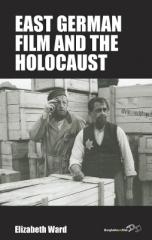
East Germany’s ruling party never officially acknowledged responsibility for the crimes committed in Germany’s name during the Third Reich. Instead, it cast communists as both victims of and victors over National Socialist oppression while marginalizing discussions of Jewish suffering. Yet for the 1977 Academy Awards, the Ministry of Culture submitted Jakob der Lügner – a film focused exclusively on Jewish victimhood that would become the only East German film to ever be officially nominated. By combining close analyses of key films with extensive archival research, this book explores how GDR filmmakers depicted Jews and the Holocaust in a country where memories of Nazi persecution were highly prescribed, tightly controlled and invariably political.
By combining close analyses of five films made between 1947 and 1988 with extensive archival research, this book unravels the complex status of films dealing with Jewish persecution produced in a country that consistently privileged narratives of political persecution above racial victimhood.
List of Illustrations
Acknowledgements
List of Abbreviations and Acronyms
Introduction
Part I: 1945–1949
Chapter 1. Picking Up the Pieces. Kurt Maetzig’s Ehe im Schatten
Part II: 1949–1961
Chapter 2. The German Democratic Republic’s Ambassador of Good Will. Konrad Wolf’s Sterne
Chapter 3. Reframing Victimhood. Konrad Wolf’s Professor Mamlock
Part III: 1961–1971
Chapter 4. Crimes of the Past and Politics of the Present. Wolfgang Luderer’s Lebende Ware
Chapter 5. ‘In Babelsberg, Nothing New’. Gottfried Kolditz’s Das Tal der sieben Monde
Part IV: 1971–1980
Chapter 6. New Encounters on Well-Worn Paths: Kurt Jung-Alsen’s Die Bilder des Zeugen Schattmann
Chapter 7. Returning to the Past: Frank Beyer’s Jakob der Lügner
Part V: 1980–1989
Chapter 8. Shifting Identities. Michael Kann’s Stielke, Heinz, fünfzehn
Chapter 9. Calendar-Based Shame? Siegfried Kühn’s Die Schauspielerin
Conclusion
Filmography
Bibliography
Index
<p>
<em>“Ward … offers an interesting perspective on a socialist world where Jewish persecution would normally give way to communist heroism. Remarkably, the persecution of Jews in these films is given a tragic honesty often not found in the ideologically controlled world of the German Democratic Republic….Highly recommended.”</em> <strong>• Choice</strong></p>
<p>
<em>“Elizabeth Ward’s meticulously researched study … opens up new perspectives not just on DEFA’s treatment of the Holocaust, but also on the discourse of antifascist cinema generally. This is an important study and one that will serve the needs of students and professional academics for years to come.”</em> <strong>• Studies in European Cinema</strong></p>
<p>
<em>“Elizabeth Ward's</em> East German Film and the Holocaust <em>is an excellent book that is well written and thoughtfully tackling a difficult and controversial topic. In a lively way, Ward brings her readers closer to unknown archive materials and well-known films, reconstructing the contexts of the underlying dramaturgical and film-technical decisions. At the same time, it shows how the state and cinematic instrumentalization or even sacralization of the Holocaust worked. In this way, Ward encourages people to return to the archive and tell the story of DEFA more from a discourse-historical perspective.”</em> <strong>• Filmblatt</strong></p>
<p>
<em>“Elizabeth Ward’s careful and wide-ranging analysis of a set of nine Defa films, in the specific socio-historical and discursive context of their production, proves to be an important contribution to research on the memory of the Holocaust in east Germany.”</em> <strong>• The German Quarterly</strong></p>
<p>
<em>“[This] exceptionally researched monograph...[with an] extensive filmography—also the first of its kind in English—and the archival materials including press and print reviews that Ward consulted make this book an important resource for scholars and teachers of East German cinema. Equally important to scholars of East German film and Holocaust studies is Ward’s ability to foreground subtle yet crucial details in her film analyses and weave them together with insights from interviews, private and company correspondence, political officials’ statements, and industrial papers.”</em> <strong>• Europe Now</strong></p>
<p>
<em>“Offering new historical information coupled with refined close readings and an impressive amount of archival work,</em> East German Film and the Holocaust <em>is an informative, insightful and fascinating book. It will be of interest to film scholars and historians alike.”</em> <strong>• Brad Prager</strong>, University of Missouri</p>
East Germany’s ruling party never officially acknowledged responsibility for the crimes committed in Germany’s name during the Third Reich. Instead, it cast communists as both victims of and victors over National Socialist oppression while marginalizing discussions of Jewish suffering. Yet for the 1977 Academy Awards, the Ministry of Culture submitted Jakob der Lügner – a film focused exclusively on Jewish victimhood that would become the only East German film to ever be officially nominated. By combining close analyses of key films with extensive archival research, this book explores how GDR filmmakers depicted Jews and the Holocaust in a country where memories of Nazi persecution were highly prescribed, tightly controlled and invariably political.
By combining close analyses of five films made between 1947 and 1988 with extensive archival research, this book unravels the complex status of films dealing with Jewish persecution produced in a country that consistently privileged narratives of political persecution above racial victimhood.
List of Illustrations
Acknowledgements
List of Abbreviations and Acronyms
Introduction
Part I: 1945–1949
Chapter 1. Picking Up the Pieces. Kurt Maetzig’s Ehe im Schatten
Part II: 1949–1961
Chapter 2. The German Democratic Republic’s Ambassador of Good Will. Konrad Wolf’s Sterne
Chapter 3. Reframing Victimhood. Konrad Wolf’s Professor Mamlock
Part III: 1961–1971
Chapter 4. Crimes of the Past and Politics of the Present. Wolfgang Luderer’s Lebende Ware
Chapter 5. ‘In Babelsberg, Nothing New’. Gottfried Kolditz’s Das Tal der sieben Monde
Part IV: 1971–1980
Chapter 6. New Encounters on Well-Worn Paths: Kurt Jung-Alsen’s Die Bilder des Zeugen Schattmann
Chapter 7. Returning to the Past: Frank Beyer’s Jakob der Lügner
Part V: 1980–1989
Chapter 8. Shifting Identities. Michael Kann’s Stielke, Heinz, fünfzehn
Chapter 9. Calendar-Based Shame? Siegfried Kühn’s Die Schauspielerin
Conclusion
Filmography
Bibliography
Index
Produktdetaljer
Biografisk notat
Elizabeth Ward is a Lecturer in German Studies and specializes in German film. She is a lecturer at the Europa-Universität Viadrina and a Marie Skłodowska-Curie Actions research fellow at the Universität Leipzig. She has published on East German cinema, contemporary Holocaust film and twenty-first century German cinema. She is the co-editor of Entertaining German Culture Contemporary Transnational Television and Film (Berghahn Books, 2023).