

Produktdetaljer
ISBN
9781400826933
Publisert
2013
Utgiver
Princeton University Press
Språk
Product language
Engelsk
Format
Product format
Digital bok
Antall sider
272
Forfatter
Digital bok /
2013
/ Engelsk
628,-
Laveste pris siste 30 dager: 628,-
Dette er en digital bok som er bundet til bokleseren Bookshelf. Du vil få en aktiveringslenke på e-post når du har fullført kjøpet.
Klikk her for mer info.
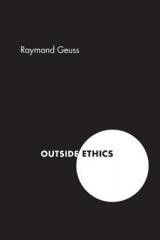

Outside Ethics brings together some of the most important and
provocative works by one of the most creative philosophers writing
today. Seeking to expand the scope of contemporary moral and political
philosophy, Raymond Geuss here presents essays bound by a shared
skepticism about a particular way of thinking about what is important
in human life--a way of thinking that, in his view, is characteristic
of contemporary Western societies and isolates three broad categories
of things as important: subjective individual preferences, knowledge,
and restrictions on actions that affect other people (restrictions
often construed as ahistorical laws). He sets these categories in a
wider context and explores various human phenomena--including poetry,
art, religion, and certain kinds of history and social criticism--that
do not fit easily into these categories. As its title suggests, this
book seeks a place outside conventional ethics. Following a brief
introduction, Geuss sets out his main concerns with a focus on ethics
and politics. He then expands these themes by discussing freedom,
virtue, the good life, and happiness. Next he examines Theodor
Adorno's views on the relation between suffering and knowledge, the
nature of religion, and the role of history in giving us critical
distances from existing identities. From here he moves to aesthetic
concerns. The volume closes by looking at what it is for a human life
to have "gaps"--to be incomplete, radically unsatisfactory, or a
failure.
Les mer
Outside Ethics brings together some of the most important and
provocative works by one of the most creative philosophers writing
today. Seeking to expand the scope of contemporary moral and political
philosophy, Raymond Geuss here presents essays bound by a shared
skepticism about a particular way of thinking about what is important
in human life--a way of thinking that, in his view, is characteristic
of contemporary Western societies and isolates three broad categories
of things as important: subjective individual preferences, knowledge,
and restrictions on actions that affect other people (restrictions
often construed as ahistorical laws). He sets these categories in a
wider context and explores various human phenomena--including poetry,
art, religion, and certain kinds of history and social criticism--that
do not fit easily into these categories. As its title suggests, this
book seeks a place outside conventional ethics. Following a brief
introduction, Geuss sets out his main concerns with a focus on ethics
and politics. He then expands these themes by discussing freedom,
virtue, the good life, and happiness. Next he examines Theodor
Adorno's views on the relation between suffering and knowledge, the
nature of religion, and the role of history in giving us critical
distances from existing identities. From here he moves to aesthetic
concerns. The volume closes by looking at what it is for a human life
to have "gaps"--to be incomplete, radically unsatisfactory, or a
failure.
Les mer
Produktdetaljer
ISBN
9781400826933
Publisert
2013
Utgiver
Princeton University Press
Språk
Product language
Engelsk
Format
Product format
Digital bok
Antall sider
272
Forfatter