

Produktdetaljer
ISBN
9781400889518
Publisert
2018
Utgiver
Princeton University Press
Språk
Product language
Engelsk
Format
Product format
Digital bok
Forfatter
Digital bok /
2018
/ Engelsk
350,-
Laveste pris siste 30 dager: 350,-
Dette er en digital bok som er bundet til bokleseren Bookshelf. Du vil få en aktiveringslenke på e-post når du har fullført kjøpet.
Klikk her for mer info.
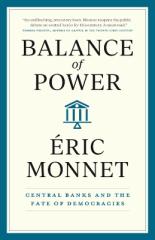

Guiding principles for ensuring that central bankers and other
unelected policymakers remain stewards of the common good Central
bankers have emerged from the financial crisis as the third great
pillar of unelected power alongside the judiciary and the military.
They pull the regulatory and financial levers of our economic
well-being, yet unlike democratically elected leaders, their power
does not come directly from the people. Unelected Power lays out the
principles needed to ensure that central bankers, technocrats,
regulators, and other agents of the administrative state remain
stewards of the common good and do not become overmighty citizens.
Paul Tucker draws on a wealth of personal experience from his many
years in domestic and international policymaking to tackle the big
issues raised by unelected power, and enriches his discussion with
examples from the United States, Britain, France, Germany, and the
European Union. Blending economics, political theory, and public law,
Tucker explores the necessary conditions for delegated but politically
insulated power to be legitimate in the eyes of constitutional
democracy and the rule of law. He explains why the solution must fit
with how real-world government is structured, and why technocrats and
their political overseers need incentives to make the system work as
intended. Tucker explains how the regulatory state need not be a
fourth branch of government free to steer by its own lights, and how
central bankers can emulate the best of judicial self-restraint and
become models of dispersed power. Like it or not, unelected power has
become a hallmark of modern government. This critically important book
shows how to harness it to the people's purposes.
Les mer
The Quest for Legitimacy in Central Banking and the Regulatory State
Guiding principles for ensuring that central bankers and other
unelected policymakers remain stewards of the common good Central
bankers have emerged from the financial crisis as the third great
pillar of unelected power alongside the judiciary and the military.
They pull the regulatory and financial levers of our economic
well-being, yet unlike democratically elected leaders, their power
does not come directly from the people. Unelected Power lays out the
principles needed to ensure that central bankers, technocrats,
regulators, and other agents of the administrative state remain
stewards of the common good and do not become overmighty citizens.
Paul Tucker draws on a wealth of personal experience from his many
years in domestic and international policymaking to tackle the big
issues raised by unelected power, and enriches his discussion with
examples from the United States, Britain, France, Germany, and the
European Union. Blending economics, political theory, and public law,
Tucker explores the necessary conditions for delegated but politically
insulated power to be legitimate in the eyes of constitutional
democracy and the rule of law. He explains why the solution must fit
with how real-world government is structured, and why technocrats and
their political overseers need incentives to make the system work as
intended. Tucker explains how the regulatory state need not be a
fourth branch of government free to steer by its own lights, and how
central bankers can emulate the best of judicial self-restraint and
become models of dispersed power. Like it or not, unelected power has
become a hallmark of modern government. This critically important book
shows how to harness it to the people's purposes.
Les mer
The Quest for Legitimacy in Central Banking and the Regulatory State
Produktdetaljer
ISBN
9781400889518
Publisert
2018
Utgiver
Princeton University Press
Språk
Product language
Engelsk
Format
Product format
Digital bok
Forfatter