

After the Post–Cold War The Future of Chinese History
Produktdetaljer
Biografisk notat
Dai Jinhua is Professor of Chinese Literature and Language at Peking University and the author of Cinema and Desire: Feminist Marxism and Cultural Politics in the Work of Dai Jinhua, as well as numerous other books in Chinese.Lisa Rofel is Professor of Anthropology at the University of California, Santa Cruz, and coauthor of Fabricating Transnational Capitalism: A Collaborative Ethnography of Italian-Chinese Global Fashion, also published by Duke University Press.
After the Post–Cold War The Future of Chinese History


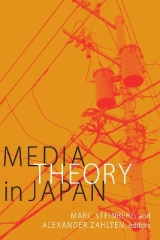


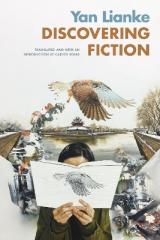


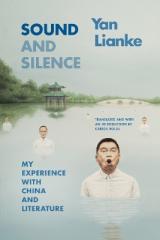


"This volume is one of the best publications of its kind, not only because of the brilliance of the original essays, but also because of the excellent translation and editing that come across as judicious as one reads it." - Jessica Yeung (China Perspectives) "This is a challenging book by an author at the top of her game. Insightful and cosmpolitan in its range, the book shows that public intellectuals in China are managing to find a voice. The editors have done the author and readers a fine service." - Paul Clark (China Journal)
Acknowledgments xi
Editor's Introduction / Lisa Rofel xiii
Introduction / Translated by Jie Li 1
Part I. Trauma, Evacuated Memories, and Inverted Histories
1. I Want to Be Human: A Story of China and the Human / Translated by Shuang Shen 25
2. Hero and the Invisible Tianxia / Translated by Yajun Mo 47
Part II. Class, Still Lives, and Masculinity
3. Temporality, Nature Morte, and the Filmmaker: A Reconsideration of Still Life / Translated by Lennet Daigle 67
4. The Piano in a Factory: Class, in the Name of the Father / Translated by Jie Li 91
Part III. The Spy Genre
5. The Spy-Film Legacy: A Preliminary Cultural Analysis of the Spy Film / Translated by Christopher Connery 109
6. In Vogue: Politics and the Nation-State in Lust, Caution, and the Lust, Caution Phenomenon in China / Translated by Erebus Wong and Lisa Rofel 127
Finale. History, Memory, and the Politics of Representation / Translated by Rebecca E. Karl 141
Interview with Dai Jinhau, July 2014 / Lisa Rofel 160
Notes 167
Selected Works of Dai Jinhua 181
Bibliography 183
Translators' Biographies 189
Index 191
"This volume is one of the best publications of its kind, not only because of the brilliance of the original essays, but also because of the excellent translation and editing that come across as judicious as one reads it." - Jessica Yeung (China Perspectives) "This is a challenging book by an author at the top of her game. Insightful and cosmpolitan in its range, the book shows that public intellectuals in China are managing to find a voice. The editors have done the author and readers a fine service." - Paul Clark (China Journal)
Acknowledgments xi
Editor's Introduction / Lisa Rofel xiii
Introduction / Translated by Jie Li 1
Part I. Trauma, Evacuated Memories, and Inverted Histories
1. I Want to Be Human: A Story of China and the Human / Translated by Shuang Shen 25
2. Hero and the Invisible Tianxia / Translated by Yajun Mo 47
Part II. Class, Still Lives, and Masculinity
3. Temporality, Nature Morte, and the Filmmaker: A Reconsideration of Still Life / Translated by Lennet Daigle 67
4. The Piano in a Factory: Class, in the Name of the Father / Translated by Jie Li 91
Part III. The Spy Genre
5. The Spy-Film Legacy: A Preliminary Cultural Analysis of the Spy Film / Translated by Christopher Connery 109
6. In Vogue: Politics and the Nation-State in Lust, Caution, and the Lust, Caution Phenomenon in China / Translated by Erebus Wong and Lisa Rofel 127
Finale. History, Memory, and the Politics of Representation / Translated by Rebecca E. Karl 141
Interview with Dai Jinhau, July 2014 / Lisa Rofel 160
Notes 167
Selected Works of Dai Jinhua 181
Bibliography 183
Translators' Biographies 189
Index 191
Produktdetaljer
Biografisk notat
Dai Jinhua is Professor of Chinese Literature and Language at Peking University and the author of Cinema and Desire: Feminist Marxism and Cultural Politics in the Work of Dai Jinhua, as well as numerous other books in Chinese.Lisa Rofel is Professor of Anthropology at the University of California, Santa Cruz, and coauthor of Fabricating Transnational Capitalism: A Collaborative Ethnography of Italian-Chinese Global Fashion, also published by Duke University Press.