

Produktdetaljer
ISBN
9781400829927
Publisert
2013
Utgiver
Princeton University Press
Språk
Product language
Engelsk
Format
Product format
Digital bok
Antall sider
240
Forfatter
Digital bok /
2013
/ Engelsk
265,-
Laveste pris siste 30 dager: 265,-
Dette er en digital bok som er bundet til bokleseren Bookshelf. Du vil få en aktiveringslenke på e-post når du har fullført kjøpet.
Klikk her for mer info.
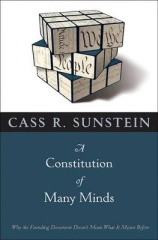

The future of the U.S. Supreme Court hangs in the balance like never
before. Will conservatives or liberals succeed in remaking the court
in their own image? In A Constitution of Many Minds, acclaimed law
scholar Cass Sunstein proposes a bold new way of interpreting the
Constitution, one that respects the Constitution's text and history
but also refuses to view the document as frozen in time. Exploring
hot-button issues ranging from presidential power to same-sex
relations to gun rights, Sunstein shows how the meaning of the
Constitution is reestablished in every generation as new social
commitments and ideas compel us to reassess our fundamental beliefs.
He focuses on three approaches to the Constitution--traditionalism,
which grounds the document's meaning in long-standing social
practices, not necessarily in the views of the founding generation;
populism, which insists that judges should respect contemporary public
opinion; and cosmopolitanism, which looks at how foreign courts
address constitutional questions, and which suggests that the meaning
of the Constitution turns on what other nations do. Sunstein
demonstrates that in all three contexts a "many minds" argument is at
work--put simply, better decisions result when many points of view are
considered. He makes sense of the intense debates surrounding these
approaches, revealing their strengths and weaknesses, and sketches the
contexts in which each provides a legitimate basis for interpreting
the Constitution today. This book illuminates the underpinnings of
constitutionalism itself, and shows that ours is indeed a
Constitution, not of any particular generation, but of many minds.
Les mer
Why the Founding Document Doesn't Mean What It Meant Before
The future of the U.S. Supreme Court hangs in the balance like never
before. Will conservatives or liberals succeed in remaking the court
in their own image? In A Constitution of Many Minds, acclaimed law
scholar Cass Sunstein proposes a bold new way of interpreting the
Constitution, one that respects the Constitution's text and history
but also refuses to view the document as frozen in time. Exploring
hot-button issues ranging from presidential power to same-sex
relations to gun rights, Sunstein shows how the meaning of the
Constitution is reestablished in every generation as new social
commitments and ideas compel us to reassess our fundamental beliefs.
He focuses on three approaches to the Constitution--traditionalism,
which grounds the document's meaning in long-standing social
practices, not necessarily in the views of the founding generation;
populism, which insists that judges should respect contemporary public
opinion; and cosmopolitanism, which looks at how foreign courts
address constitutional questions, and which suggests that the meaning
of the Constitution turns on what other nations do. Sunstein
demonstrates that in all three contexts a "many minds" argument is at
work--put simply, better decisions result when many points of view are
considered. He makes sense of the intense debates surrounding these
approaches, revealing their strengths and weaknesses, and sketches the
contexts in which each provides a legitimate basis for interpreting
the Constitution today. This book illuminates the underpinnings of
constitutionalism itself, and shows that ours is indeed a
Constitution, not of any particular generation, but of many minds.
Les mer
Why the Founding Document Doesn't Mean What It Meant Before
Produktdetaljer
ISBN
9781400829927
Publisert
2013
Utgiver
Princeton University Press
Språk
Product language
Engelsk
Format
Product format
Digital bok
Antall sider
240
Forfatter