

Produktdetaljer
ISBN
9789400739864
Publisert
2012-02-02
Utgiver
Springer
Høyde
235 mm
Bredde
155 mm
Aldersnivå
Research, P, 06
Språk
Product language
Engelsk
Format
Product format
Heftet
Antall sider
20
"The essays reflect a range of disciplinary perspectives and approaches, including history, sociology, psychology, journalism, international relations, and law, unified around a theme of genocide prevention ... . Contributions vary from the theoretical, to the descriptive, to the practical based on personal experiences. The book is thus likely to appeal to a wide audience interested in engaging with both theoretical and practical perspectives on the dynamics of genocide and what we might focus upon in order to prevent its recurrence." (Joanna Kyriakakis, Criminal Law and Philosophy, Vol. 10, 2016)
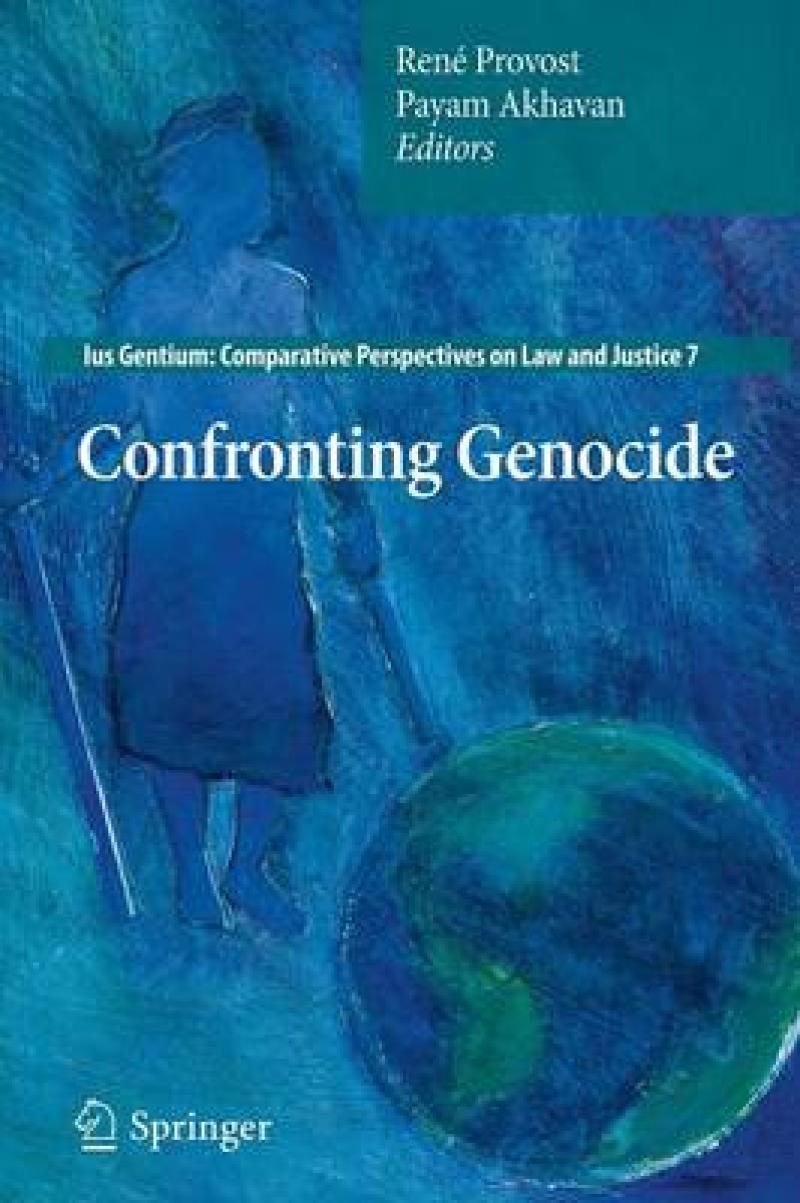
This volume explores the complex nature of genocide and the relative promise of avenues identified by the international community to attempt to put a definitive end to its occurrence, including criminal accountability, civil disobedience and intervention.
Les mer
“Never again” stands as one the central pledges of the international community following the end of the Second World War, upon full realization of the massive scale of the Nazi extermination programme. Genocide stands as an intolerable assault on a sense of common humanity embodied in the Universal Declaration of Human Rights and other fundamental international instruments, including the Convention on the Prevention and Punishment of the Crime of Genocide and the United Nations Charter. And yet, since the Second World War, the international community has proven incapable of effectively preventing the occurrence of more genocides in places like Cambodia, Yugoslavia, Rwanda and Sudan. Is genocide actually preventable, or is “ever again” a more accurate catchphrase to capture the reality of this phenomenon? The essays in this volume explore the complex nature of genocide and the relative promise of various avenues identified by the international community to attempt to put a definitive end to its occurrence. Essays focus on a conceptualization of genocide as a social and political phenomenon, on the identification of key actors (Governments, international institutions, the media, civil society, individuals), and on an exploration of the relative promise of different means to prevent genocide (criminal accountability, civil disobedience, shaming, intervention). The essays grew out of the first Echenberg Family Conference on Human Rights at the McGill Centre for Human Rights and Legal Pluralism in Montréal, Canada.
Les mer
First comprehensive treatment of genocide prevention Anchored in the study of past and current genocide Interdisciplinary approach to identify concrete solutions
GPSR Compliance
The European Union's (EU) General Product Safety Regulation (GPSR) is a set of rules that requires consumer products to be safe and our obligations to ensure this.
If you have any concerns about our products you can contact us on ProductSafety@springernature.com.
In case Publisher is established outside the EU, the EU authorized representative is:
Springer Nature Customer Service Center GmbH
Europaplatz 3
69115 Heidelberg, Germany
ProductSafety@springernature.com
Les mer
Produktdetaljer
ISBN
9789400739864
Publisert
2012-02-02
Utgiver
Springer
Høyde
235 mm
Bredde
155 mm
Aldersnivå
Research, P, 06
Språk
Product language
Engelsk
Format
Product format
Heftet
Antall sider
20