

Produktdetaljer
ISBN
9781441973771
Publisert
2020
Utgiver
Springer Nature
Språk
Product language
Engelsk
Format
Product format
Digital bok
Forfatter
Digital bok /
2020
/ Engelsk
355,-
Laveste pris siste 30 dager: 354,-
Dette er en digital bok som er bundet til bokleseren Bookshelf. Du vil få en aktiveringslenke på e-post når du har fullført kjøpet.
Klikk her for mer info.

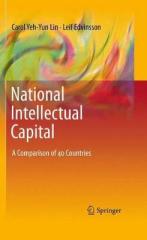

Over the past decade, knowledge assets and intellectual capital have
been attracting an increasing amount of attention, not only from
academics and CEOs, but also from national policy makers. To date,
most studies of intellectual capital have focused at the
organizational level, with an emphasis on explaining the role of
“intangible assets” as a differentiator between accounting value
and market value as a possible source of corporate competitive
advantage. More recently, pioneers in the field, including the authors
of this book, have begun to apply these methodologies to a broader
scope, with the objective of comparing the intellectual capital
indices at the national or regional level. As a result, an increasing
number of world organizations and researchers are commissioned to
investigate this future-oriented crucial national issue. Yet, the
linkage between the value of intangible assets and how to quantify or
benchmark it is still tenuous, not to mention easily misunderstood by
a layman for guiding better decision making. With the belief that
numbers talk and statistics hide valuable information, this book
serves to present the authors’ research findings, covering 14 years
(1995-2008) of intellectual capital information, comprised of human
capital, market capital, process capital, renewal capital, and
financial capital for 40 countries. The last three chapters go beyond
analysis of current intellectual capital factors, and present
practical tools for launching initiatives at the national level. The
book will serve as an essential resource for researchers, policy
makers, and business leaders concerned with issues of economic growth
and competitiveness, innovation, and business creation.
Les mer
A Comparison of 40 Countries
Over the past decade, knowledge assets and intellectual capital have
been attracting an increasing amount of attention, not only from
academics and CEOs, but also from national policy makers. To date,
most studies of intellectual capital have focused at the
organizational level, with an emphasis on explaining the role of
“intangible assets” as a differentiator between accounting value
and market value as a possible source of corporate competitive
advantage. More recently, pioneers in the field, including the authors
of this book, have begun to apply these methodologies to a broader
scope, with the objective of comparing the intellectual capital
indices at the national or regional level. As a result, an increasing
number of world organizations and researchers are commissioned to
investigate this future-oriented crucial national issue. Yet, the
linkage between the value of intangible assets and how to quantify or
benchmark it is still tenuous, not to mention easily misunderstood by
a layman for guiding better decision making. With the belief that
numbers talk and statistics hide valuable information, this book
serves to present the authors’ research findings, covering 14 years
(1995-2008) of intellectual capital information, comprised of human
capital, market capital, process capital, renewal capital, and
financial capital for 40 countries. The last three chapters go beyond
analysis of current intellectual capital factors, and present
practical tools for launching initiatives at the national level. The
book will serve as an essential resource for researchers, policy
makers, and business leaders concerned with issues of economic growth
and competitiveness, innovation, and business creation.
Les mer
A Comparison of 40 Countries
Produktdetaljer
ISBN
9781441973771
Publisert
2020
Utgiver
Springer Nature
Språk
Product language
Engelsk
Format
Product format
Digital bok
Forfatter