

Produktdetaljer
ISBN
9783030279653
Publisert
2020
Utgiver
Springer Nature
Språk
Product language
Engelsk
Format
Product format
Digital bok
Forfatter
Digital bok /
2020
/ Engelsk
258,-
Laveste pris siste 30 dager: 257,-
Dette er en digital bok som er bundet til bokleseren Bookshelf. Du vil få en aktiveringslenke på e-post når du har fullført kjøpet.
Klikk her for mer info.
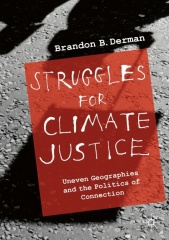

This book provides an accessible but intellectually rigorous
introduction to the global social movement for ‘climate justice’
and addresses the socially uneven consequences of anthropogenic
climate change. Deploying relational understandings of nature-society,
space, and power, Brandon Derman shows that climate change has been
co-produced with social inequality. Mismatching levels of
responsibility and vulnerability, and institutions that emerged in
tandem with those disproportionalities compose the terrain on which
NGOs and social movements now contest climate injustice in a
wide-ranging “politics of connection.” Case-based chapters explore
the defining commitments of affected and allied communities, and how
they have shaped specific struggles mobilizing human rights,
international treaties, transnational activist forums, national and
local constituencies, and broad-based demonstrations. Derman
synthesizes these cases and similar efforts across the globe to
identify and explore crosscutting themes in climate justice politics
as well as the opportunities and dilemmas facing advocates and
activists, and those who would ally with them going forward. How
should we understand campaigns for climate justice? What do these
initiatives share, and what differentiates them? What, in fact, does
“climate justice” mean in these contexts? And what do the
framing and progression of such efforts in different settings suggest
about the broader conditions that produce and sustain climate
injustice, how those conditions could be unmade, and what might take
their place? Struggles for Climate Justice approaches these questions
from an interdisciplinary perspective accessible to graduate and
advanced undergraduate students as well as scholars of geography,
social movements, environmental politics, policy, and socio-legal
studies.
Les mer
Uneven Geographies and the Politics of Connection
This book provides an accessible but intellectually rigorous
introduction to the global social movement for ‘climate justice’
and addresses the socially uneven consequences of anthropogenic
climate change. Deploying relational understandings of nature-society,
space, and power, Brandon Derman shows that climate change has been
co-produced with social inequality. Mismatching levels of
responsibility and vulnerability, and institutions that emerged in
tandem with those disproportionalities compose the terrain on which
NGOs and social movements now contest climate injustice in a
wide-ranging “politics of connection.” Case-based chapters explore
the defining commitments of affected and allied communities, and how
they have shaped specific struggles mobilizing human rights,
international treaties, transnational activist forums, national and
local constituencies, and broad-based demonstrations. Derman
synthesizes these cases and similar efforts across the globe to
identify and explore crosscutting themes in climate justice politics
as well as the opportunities and dilemmas facing advocates and
activists, and those who would ally with them going forward. How
should we understand campaigns for climate justice? What do these
initiatives share, and what differentiates them? What, in fact, does
“climate justice” mean in these contexts? And what do the
framing and progression of such efforts in different settings suggest
about the broader conditions that produce and sustain climate
injustice, how those conditions could be unmade, and what might take
their place? Struggles for Climate Justice approaches these questions
from an interdisciplinary perspective accessible to graduate and
advanced undergraduate students as well as scholars of geography,
social movements, environmental politics, policy, and socio-legal
studies.
Les mer
Uneven Geographies and the Politics of Connection
Produktdetaljer
ISBN
9783030279653
Publisert
2020
Utgiver
Springer Nature
Språk
Product language
Engelsk
Format
Product format
Digital bok
Forfatter