

Produktdetaljer
ISBN
9781501704796
Publisert
2017
Utgiver
Cornell University Press
Språk
Product language
Engelsk
Format
Product format
Digital bok
Forfatter
Digital bok /
2017
/ Engelsk
249,-
Laveste pris siste 30 dager: 249,-
Dette er en digital bok som er bundet til bokleseren Bookshelf. Du vil få en aktiveringslenke på e-post når du har fullført kjøpet.
Klikk her for mer info.
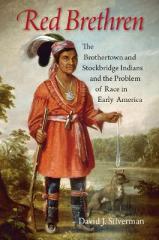
NEW ENGLAND INDIANS CREATED THE MULTITRIBAL BROTHERTOWN AND
STOCKBRIDGE COMMUNITIES DURING THE EIGHTEENTH CENTURY WITH THE INTENT
OF USING CHRISTIANITY AND CIVILIZED REFORMS TO COPE WITH WHITE
EXPANSION. In_ Red Brethren_, David J. Silverman considers the stories
of these communities and argues that Indians in early America were
racial thinkers in their own right and that indigenous people rallied
together as Indians not only in the context of violent resistance but
also in campaigns to adjust peacefully to white dominion. All too
often, the Indians discovered that their many concessions to white
demands earned them no relief.
In the era of the American Revolution, the pressure of white
settlements forced the Brothertowns and Stockbridges from New England
to Oneida country in upstate New York. During the early nineteenth
century, whites forced these Indians from Oneida country, too, until
they finally wound up in Wisconsin. Tired of moving, in the 1830s and
1840s, the Brothertowns and Stockbridges became some of the first
Indians to accept U.S. citizenship, which they called "becoming
white," in the hope that this status would enable them to remain as
Indians in Wisconsin. Even then, whites would not leave them alone.
_Red Brethren_ traces the evolution of Indian ideas about race under
this relentless pressure. In the early seventeenth century, indigenous
people did not conceive of themselves as Indian. They sharpened their
sense of Indian identity as they realized that Christianity would not
bridge their many differences with whites, and as they fought to keep
blacks out of their communities. The stories of Brothertown and
Stockbridge shed light on the dynamism of Indians' own racial history
and the place of Indians in the racial history of early America.
Les mer
The Brothertown and Stockbridge Indians and the Problem of Race in Early America
NEW ENGLAND INDIANS CREATED THE MULTITRIBAL BROTHERTOWN AND
STOCKBRIDGE COMMUNITIES DURING THE EIGHTEENTH CENTURY WITH THE INTENT
OF USING CHRISTIANITY AND CIVILIZED REFORMS TO COPE WITH WHITE
EXPANSION. In_ Red Brethren_, David J. Silverman considers the stories
of these communities and argues that Indians in early America were
racial thinkers in their own right and that indigenous people rallied
together as Indians not only in the context of violent resistance but
also in campaigns to adjust peacefully to white dominion. All too
often, the Indians discovered that their many concessions to white
demands earned them no relief.
In the era of the American Revolution, the pressure of white
settlements forced the Brothertowns and Stockbridges from New England
to Oneida country in upstate New York. During the early nineteenth
century, whites forced these Indians from Oneida country, too, until
they finally wound up in Wisconsin. Tired of moving, in the 1830s and
1840s, the Brothertowns and Stockbridges became some of the first
Indians to accept U.S. citizenship, which they called "becoming
white," in the hope that this status would enable them to remain as
Indians in Wisconsin. Even then, whites would not leave them alone.
_Red Brethren_ traces the evolution of Indian ideas about race under
this relentless pressure. In the early seventeenth century, indigenous
people did not conceive of themselves as Indian. They sharpened their
sense of Indian identity as they realized that Christianity would not
bridge their many differences with whites, and as they fought to keep
blacks out of their communities. The stories of Brothertown and
Stockbridge shed light on the dynamism of Indians' own racial history
and the place of Indians in the racial history of early America.
Les mer
The Brothertown and Stockbridge Indians and the Problem of Race in Early America
Produktdetaljer
ISBN
9781501704796
Publisert
2017
Utgiver
Cornell University Press
Språk
Product language
Engelsk
Format
Product format
Digital bok
Forfatter