

Produktdetaljer
Biografisk notat
Dr Jeffrey T. Fowler is a retired US Army historian and military police officer who served in Korea and Germany. He is the director of a security-consulting firm in the American Midwest. His passions are military history, weapons, dogs, and horses. This is his first book for Osprey.
Mike Chappell spent 22 years in infantry soldiering, retiring in 1974 as RSM of the 1st Bn., The Wessex Regiment (Rifle Volunteers). Since beginning to paint military subjects in 1968 Mike has gained world-wide popularity as a military illustrator, and has been a prolific artist and author for Osprey for well over 20 years.


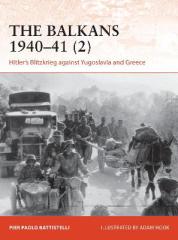


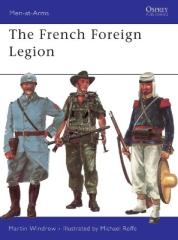


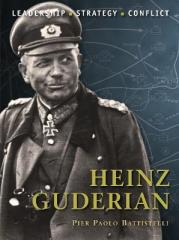


It is often forgotten that the German Wehrmacht of 1939-45 relied heavily upon horses.
Not only was the majority of Army transport and much of the artillery dependent on draught horse teams; the Germans also kept a horse-mounted cavalry division in the field until the end of 1941. After withdrawing it, they discovered a need to revive and greatly expand their cavalry units in 1943-45. The Army and Waffen-SS cavalry proved their worth on the Russian Front, supported by other Axis cavalry contingents - Romanian, Hungarian, Italian, and locally recruited.
In this book an experienced horseman describes that last generation of horse-soldiers in a text supported by tables, photographs, and meticulous colour plates.
The pre-war German cavalry
Operations of the 1st Cavalry Division and of mounted reconnaissance units in Poland and France, 1939-40
Operation Barbarossa - German cavalry in Russia, June-December 1941
Expanded roles for cavalry from spring 1942 - typical operations: anti-partisan warfare, and reconnaissance
The Waffen-SS cavalry
Axis cavalry: Cossacks, Kalmyks, Italian, Rumanian and Hungarian units
Support services
Equipment and weapons
It is often forgotten that the German Wehrmacht of 1939-45 relied heavily upon horses.
Not only was the majority of Army transport and much of the artillery dependent on draught horse teams; the Germans also kept a horse-mounted cavalry division in the field until the end of 1941. After withdrawing it, they discovered a need to revive and greatly expand their cavalry units in 1943-45. The Army and Waffen-SS cavalry proved their worth on the Russian Front, supported by other Axis cavalry contingents - Romanian, Hungarian, Italian, and locally recruited.
In this book an experienced horseman describes that last generation of horse-soldiers in a text supported by tables, photographs, and meticulous colour plates.
The pre-war German cavalry
Operations of the 1st Cavalry Division and of mounted reconnaissance units in Poland and France, 1939-40
Operation Barbarossa - German cavalry in Russia, June-December 1941
Expanded roles for cavalry from spring 1942 - typical operations: anti-partisan warfare, and reconnaissance
The Waffen-SS cavalry
Axis cavalry: Cossacks, Kalmyks, Italian, Rumanian and Hungarian units
Support services
Equipment and weapons
Produktdetaljer
Biografisk notat
Dr Jeffrey T. Fowler is a retired US Army historian and military police officer who served in Korea and Germany. He is the director of a security-consulting firm in the American Midwest. His passions are military history, weapons, dogs, and horses. This is his first book for Osprey.
Mike Chappell spent 22 years in infantry soldiering, retiring in 1974 as RSM of the 1st Bn., The Wessex Regiment (Rifle Volunteers). Since beginning to paint military subjects in 1968 Mike has gained world-wide popularity as a military illustrator, and has been a prolific artist and author for Osprey for well over 20 years.